 Darija Pro
Which basic darija phrases should you learn first?
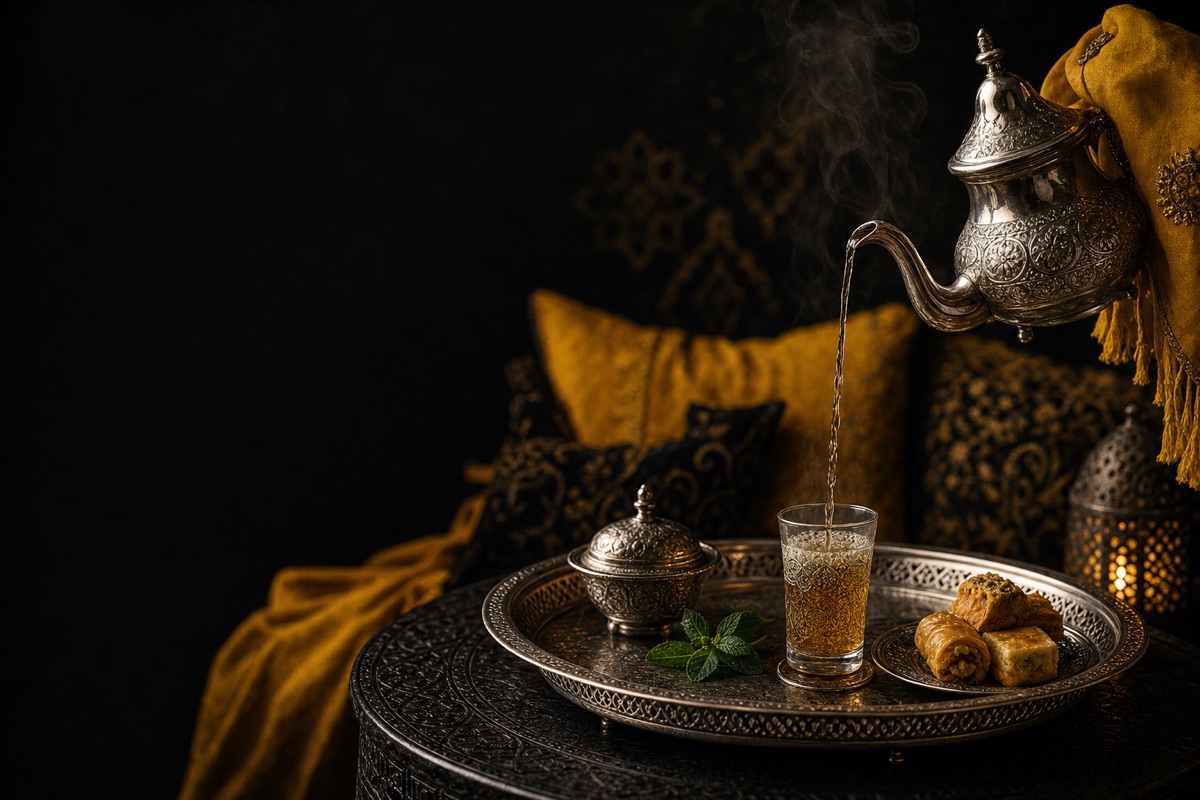
Start with the phrases of the table and everyday politeness, the ones you hear at every family meal: salam (hi), labas (fine), 3afak (please), bghit kas d atay 3afak (I would like a glass of tea, please). Ten phrases are enough to answer instead of smiling in silence. Here is a first set, taken from the app's 387 phrases, with their Arabic script. In the app, each one has its voice.
Greet and ask for news
salam (سلام): hi, hello. sba7 lkhir: good morning. labas (لا باس): fine, all is well. wach nta labas? (واش نتا لاباس): are you well, to a man. The simplest answer is labas, l7amdolillah.
The word wach opens almost every question: wach 3andek khout? do you have brothers and sisters; wach 3jbatek lmakla? did you like the dish.
At the table: ask and thank
bghit kas d atay 3afak (بغيت كاس د أتاي عافاك): I would like a glass of tea, please. bghit, I want or I would like, is the polite form that works everywhere. 3afak (عافاك): please. kolchi kan bnin, chukran: everything was delicious, thank you. That is the sentence that makes the cook happy.
Everyday requests
aji (آجي): come. jib (جيب): bring. jib atay 3afak: bring the tea, please. These imperatives are the ones you hear most in a Moroccan home, and the ones you can reuse safely. And to take your leave: ntlaqaw men be3d nchallah, see you later, God willing.
Repeat them until they come out on their own
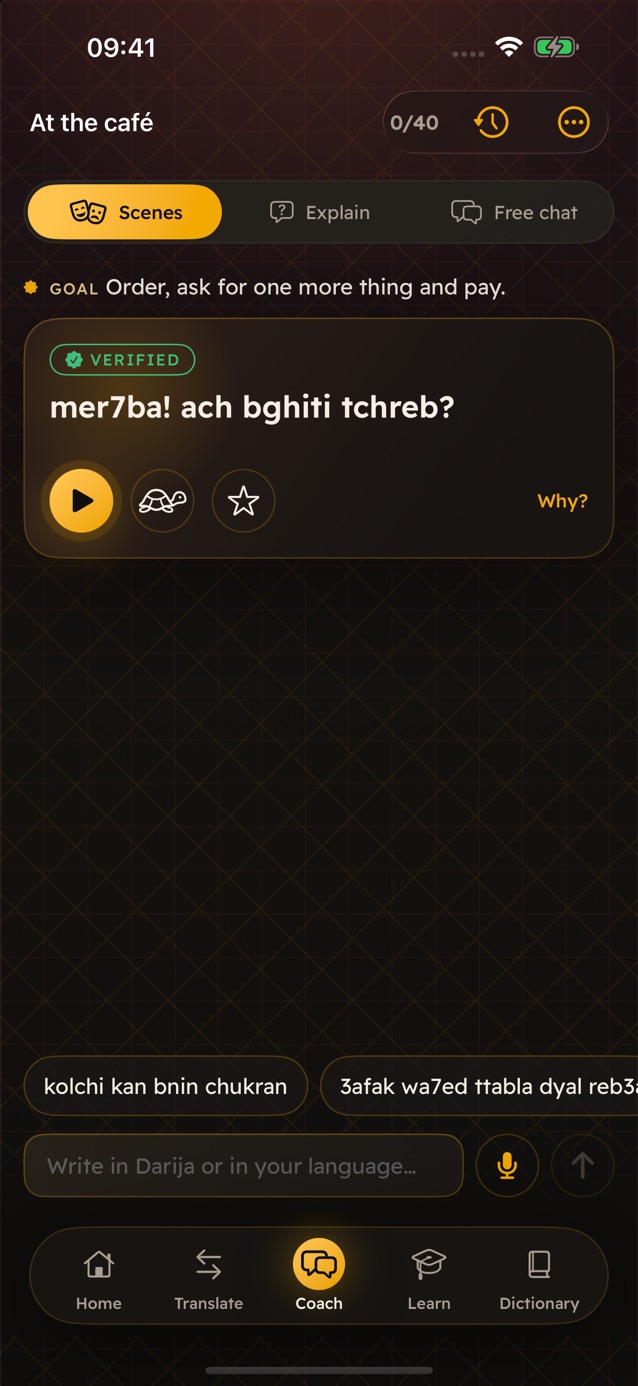
The Coach plays fourteen real-life scenes and offers two lines each turn, drawn from these phrases. You listen, you say them out loud, “Say it” tells you whether it was Good, Almost or worth another try. A star keeps the phrase in My list, and the review brings it back over the next days.
Questions about this guide
How do you say “I want” in darija?
bghit (بغيت). It is the past form of the verb bgha, used as a polite “I want” or “I would like”: bghit kas d atay, I would like a glass of tea.
How do you say “please” in darija?
3afak (عافاك). The 3 notes a throat sound. Without the digit, it is written afak.